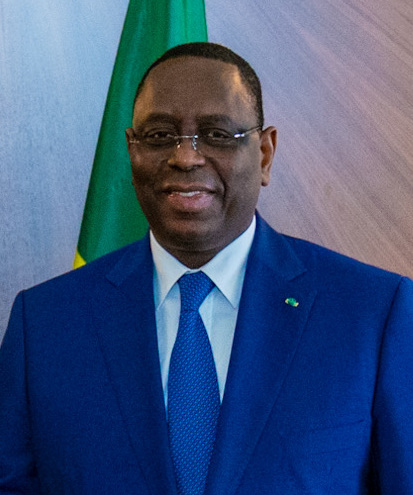
From Geologist to Head of State: Macky Sall's Rise to Power in Senegal
The journey from a student of the earth's ancient mysteries to the leader of a vibrant African nation is one rarely undertaken. Yet, this is precisely the path forged by Macky Sall, a Senegalese politician whose remarkable ascent from a background in geology to the highest office in Senegal stands as a testament to resilience, strategic vision, and an unwavering commitment to public service. Born in the city of Fatick in December 1961, Sall's story is one of consistent growth, marked by significant political milestones and a dedication that has profoundly shaped the economic and social landscape of his country.
As President of Senegal since April 2012, Macky Sall has become an undeniable force in African politics, symbolizing modern progress and a unique blend of scientific rationality with deeply rooted cultural values. While his impressive public career naturally draws attention to his contributions to nation-building, discussions often touch upon his personal standing, including his estimated macky sall net worth of $3 million. This figure, often a point of public interest, reflects the transparency and established financial profile of a leader who has navigated the complex world of Senegalese politics for decades, consistently placing his nation's development at the forefront.
The Formative Years: From Fatick's Soil to Geological Expertise
Macky Sall's life journey began in Fatick, Senegal, a modest environment that instilled in him an early appreciation for hard work and simple living—values he carries to this day. His intellectual curiosity, however, quickly led him down an academic path focused on the intricate sciences of the earth. Sall pursued higher education with zeal, graduating from the prestigious Institute of Sciences of Earth, followed by advanced studies at the Ecole Nationale Supérieure du Pétrole et des Moteurs. He also honed his expertise at Dakar's Cheikh Anta Diop University, where he obtained his doctorate in Geology in 1985, and further at the Paris Institute of Political Studies (Sciences Po).
This robust educational background as a geologist provided Sall with a unique analytical perspective, a grounded approach to problem-solving, and a systematic way of thinking that would later prove invaluable in the turbulent world of politics. His training in understanding complex systems, resource management, and long-term planning, typically applied to geological formations and natural resources, became a foundational toolkit for navigating national governance and economic development. It instilled in him a methodical approach, often seen in his policy-making, which seeks to uncover the root causes of issues and build sustainable solutions rather than merely addressing symptoms.
Laying the Political Groundwork: Local Roots and National Aspirations
Sall’s political career commenced at the local level, where he forged direct connections with the populace and gained practical administrative experience. His dedication saw him elected Mayor of Fatick, serving two distinct terms from June 2002 to 2008, and again from April 2009 to April 2012. Prior to this, he even became the youngest Governor of the Fatick region at just 34 years old, showcasing an early capacity for leadership and public service.
These early roles were crucial. They allowed Sall to understand the grassroots challenges faced by ordinary Senegalese citizens, from infrastructure needs to social welfare, directly influencing his later national policies. His effectiveness at the local level did not go unnoticed, leading to his entry into national politics. Initially a member of the Senegalese Democratic Party (PDS), Sall quickly rose through its ranks, demonstrating his acumen and commitment. His national profile significantly increased when he was appointed Prime Minister of Senegal in April 2007, a position he held until June 2007. Following this, he was elected President of the National Assembly, serving from June 2007 to November 2008. These positions showcased his growing influence and legislative prowess, preparing him for the ultimate political challenge.
A Decisive Break and the Path to the Presidency
The political landscape took a dramatic turn for Macky Sall following a significant divergence with then-President Abdoulaye Wade. This break, which saw Sall removed from his position as President of the National Assembly in November 2008, was a pivotal moment. Instead of retreating, Sall embraced the challenge, forming his own political party, the Alliance for the Republic (APR). This courageous move to join the opposition demonstrated his true grit, resilience, and ambition, proving he was not afraid to challenge the status quo for what he believed was right.
The 2012 presidential election became the battleground for this ideological and political divide. Macky Sall, representing his nascent party, faced off against his former mentor, Abdoulaye Wade. In the first round, Sall garnered 26.5% of the votes, trailing Wade's 34.8%, which necessitated a runoff election. The political atmosphere was charged, but Sall's campaign, focusing on modernization, good governance, and a promise of real change, resonated deeply with the Senegalese people. Ultimately, the runoff saw a decisive victory for Macky Sall, with Abdoulaye Wade conceding the race. This victory marked a monumental shift in Senegalese politics, ushering in a new era of leadership.
Leading Senegal: A Decade of Transformation and Vision
Since taking office as the 4th President of Senegal in April 2012, Macky Sall has embarked on an ambitious agenda to transform the nation. His presidency has been characterized by revolutionary policies aimed at modernizing Senegal's economy, promoting regional integration within West Africa, and significantly improving the quality of life for its citizens. Initiatives focusing on poverty reduction, enhanced healthcare access, and robust infrastructure development have been central to his vision. Under his guidance, Senegal has pursued ambitious projects like the "Plan Sénégal Émergent" (Emerging Senegal Plan), which aims to accelerate the country's socio-economic development and elevate its global standing. To delve deeper into the impact of his leadership and his financial standing, you might be interested in Macky Sall's $3 Million Net Worth and Decade as Senegal's President.
Macky Sall's leadership style is a unique blend of Western-learned principles—gained from his extensive education—and a profound connection to his African roots. This dual perspective has enabled him to navigate the complexities of international diplomacy while remaining firmly attuned to the specific needs and cultural nuances of his own people. His commitment to progress has positioned him as one of Africa's most innovative leaders, daring to go beyond conventions to foster real advancement for his country. As of May 2023, with over ten years in office, Macky Sall, at 61 years old, continues to shape Senegal's future as a visionary leader, a topic explored further in Macky Sall at 61: Shaping Senegal's Future as a Visionary Leader.
The Enduring Legacy of a Visionary Leader
Macky Sall's journey from a geology student to the President of Senegal is more than just a personal success story; it is an inspiring narrative for an entire continent. His rise illustrates the power of education, perseverance, and a deep-seated belief in one's ability to effect positive change. His astrological sign, Sagittarius, born on December 11th, is often associated with ambition, vision, and a quest for knowledge – traits that perfectly align with his distinguished career. He has not only served as a political figure but has also embodied the hope for a prosperous and stable future for Senegal and beyond. His unwavering commitment to governance and development has left an indelible mark on his nation, solidifying his place as one of Africa's great political leaders.
Ultimately, Macky Sall's story offers valuable insights for aspiring leaders worldwide: that a strong educational foundation, coupled with practical experience and an unyielding resolve, can indeed lead to profound national transformation. His capacity to transition from a scientific discipline to the highest echelons of power showcases a unique adaptability and a pragmatic approach to addressing the myriad challenges of modern governance. His leadership continues to inspire, proving that with true grit and ambition, an individual can shape the destiny of an entire nation.
